The recent EHRC guidance and the ongoing public conversation around trans people and access to facilities has left many feeling frightened, uncertain and overwhelmed. Inclusive Church are working alongside others to understand the implications and to offer support, guidance and reassurance to our members, church leaders and partners. The legal situation remains complex and evolving, so rather than add another voice to the confusion, we are taking time to listen carefully and seek expert advice.
What I do feel able to say is this: many trans people are really scared right now.
Not theoretical people. Not abstract concepts. Real people. People who worship in our churches, volunteer in our communities, sing in our choirs, make tea, lead prayers, laugh, cry, hope and belong. People who are telling us they are worried about their future, their safety and whether they will remain welcome in spaces they have long called home. Many of them are losing sleep and the worry is making them ill. This matters.
As Christians, we are called to pay attention when vulnerable people tell us they are afraid. And we are asked to respond with compassion.
Nobody should face violence, intimidation or exclusion. Women deserve safety. Trans people deserve safety. Disabled people deserve safety. Everybody deserves dignity.
The current proposals don't offer this, for anyone. And will in fact have a much further reaching detrimental impact on more people. Please write to your MP before the end of June and raise concerns about the proposed guidance. If you're not sure where to begin, there’s advice here: code concerns To read up more specifically on the potential impact on disabled lives head to Disability Rights UK
Inclusive Church is an educational charity. We exist to help people keep learning, listening, discerning and growing in appreciation and awareness of the importance of inclusive, accessible church communities. Inclusion is not a destination we arrive at. It is an attitude of attention, a practice of pastoral care and inhabiting of compassion. It is the ongoing work of noticing who is missing, who is struggling, and whose voice is being drowned out by louder ones.
The story of Elijah listening for God in the still small voice comes to mind. Not in the earthquake. Not in the fire. Not in the wind. Sometimes the loudest voices dominate the conversation, while the quiet voices carry the deepest truths. We must keep listening.
One of the challenges of our current media landscape is that attention and significance are not the same thing. Some stories dominate headlines for months, while others receive barely a mention.
In recent years trans people, who make up a tiny proportion of the population*, have been the subject of extraordinary levels of media and political attention. Yet at the same time other issues affecting the safety of women and girls often struggle to gain comparable coverage.
I was particularly struck by recent reporting into online communities that actively encourage sexual violence and coercive behaviour towards women. One such site reportedly received 81 million visits in a single month, yet the story barely registered in the national conversation. See CNN investigation compared to UK news analysis
That should give us pause.
As Christians committed to justice, we need to be discerning whose voices are amplified, whose fears are centred, and where genuine harm is occurring, and keep returning to that question ‘and what would Jesus do?’
And that brings us back to toilets.
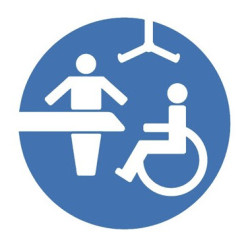
Because toilets are one of those fascinating places where questions of dignity, access and belonging suddenly become visible. Everybody pees. Everybody needs the loo. Yet not everybody experiences that need with equal ease, safety or welcome.
We are not, nor should we ever be, about policing what someone has in their pants and whether we will let them pee in peace. |